
Federal immigration enforcement actions against employers are gradually advancing, but a full-scale escalation may be on the horizon
Although U.S. federal immigration enforcement actions against employers are still in a gradual phase, employer-side lawyers remind businesses not to let their guard down. ICE has begun conducting surprise inspections targeting small businesses, which may expand to a larger scale in the future, along with increased I-9 form audits.
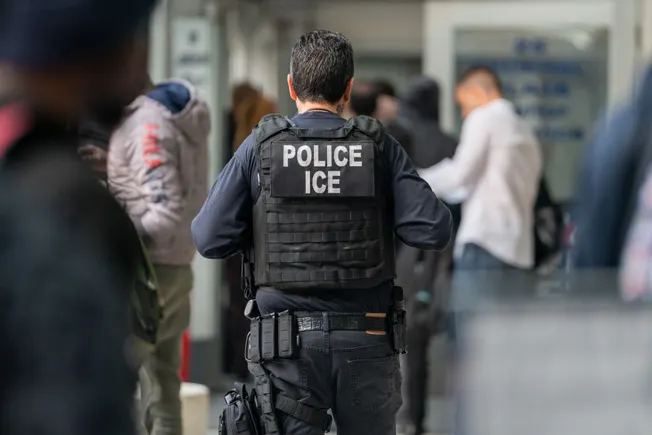
Enforcement activities by federal immigration authorities may be gradually intensifying, but employer-side immigration lawyers told HR Dive that the slow pace does not mean businesses can let their guard down.
Before President Donald Trump took office, new administration officials promised large-scale workplace enforcement. To date, U.S. Immigration and Customs Enforcement (ICE) has primarily targeted small entities with raids, with recent cases including a construction site in Louisiana and a market in Philadelphia. But human resources departments may also need to prepare for an increase in I-9 form audits.
ICE strategy remains opaque
The I-9 form is used to verify that employees are eligible to work in the United States and must be completed by all employees. According to Chris Thomas, a partner at Holland & Hart, I-9 form audits have increased across the country since Trump took office, and this trend is expected to continue.
ICE's strategy may partly involve quotas: Thomas said he spoke with an ICE agent in "a small location in Vermont" whose task was to deliver I-9 inspection notices to at least five employers per week. Thomas also expects ICE to expand its audit capacity by reassigning existing agency support staff and hiring outside contractors.
"This plan has existed since the election," Thomas said; for example, Trump signed an executive order on his inauguration day requiring the Secretary of Homeland Security to "substantially increase the number of agents and officers across agencies, including ICE."
"Right now they only have the capacity for small audits, but we have good reason to believe they will expand their capacity and move toward larger-scale enforcement actions," Thomas added.
ICE says it does not assign quotas to field offices, which focus on identifying, locating, and arresting noncitizens with criminal convictions or outstanding warrants, as well as those who re-entered illegally or received final removal orders.
When asked about potential staffing increases, ICE referred HR Dive to the U.S. Department of Homeland Security (DHS). DHS declined to comment.
Bruce Buchanan, senior counsel at Littler Mendelson, said the government's gradual approach to enforcement is somewhat expected, partly due to previous underfunding. Federal lawmakers addressed the agency's budget shortfall in a recent budget resolution that provided nearly $10 billion in funding for ICE.
Buchanan said he has not heard of ICE using the kind of inspection notice quotas Thomas described, but he said agents might meet such requirements by distributing promotional materials for the agency's IMAGE program to employers rather than issuing formal inspection notices. "That would clearly count as an inspection notice," Buchanan said.
It remains unclear how strict ICE will be with individual employers. Buchanan said one of his clients was contacted by Homeland Security Investigations and asked to voluntarily provide its I-9 forms to the agency by a specified date, but after further communication, was told it could schedule the timing as needed.

"This is frightening communities"
Mary Pivec, an attorney at Pivec & Associates PLLC, said employers in the food service, construction, and hospitality industries are "on pins and needles" in anticipation of enforcement actions under the Trump administration. She added that these industries, along with warehousing, light manufacturing, assembly, transportation, and receiving, are expected to be primary targets.
Pivec said ICE delivery of inspection notices has been "sporadic," but she has seen cases where teams of five to six agents confront workers, and if workers cannot answer agents' questions and provide documents, they may be detained. According to The Baltimore Banner, agents detained multiple employees at a Baltimore restaurant in early February; employees were also required to mail their I-9 forms to ICE.
"These arrests are happening," Pivec said. "This is frightening communities."
ICE's methods for deciding which businesses to enter vary. David Adams, account manager at background check provider SafestHires, said the agency may rely on word of mouth, especially in communities where it is known that an employer may hire noncitizens not authorized to work.
Disgruntled former employees may also report potential violations to ICE. "These are easy targets because they already have intelligence," Adams said.
An ICE spokesperson said via email that the agency targets employers who violate employment laws.
ICE is not the only agency that may assess employer compliance with immigration laws. Pivec said U.S. Citizenship and Immigration Services (USCIS) Fraud Detection and National Security Directorate, which reviews compliance for certain visa applications, has also increased workplace enforcement.
U.S. Customs and Border Protection (CBP) is also a concern. Given the administration's high-profile detentions of international travelers, students, and job seekers, some employers are worried about international travel. Thomas said companies are reassessing whether they can afford to send employees on international business trips, partly due to concerns that authorities may inspect travelers' electronic devices, which could raise privacy issues.
"This is a period of heightened scrutiny by CBP at ports of entry," said Daniel Brown, a partner at Fragomen. "It's best to check with company counsel to ensure travel is fine on a case-by-case basis."

Employer exposure
Thomas said employers face three main concerns in immigration enforcement actions: civil fines, potential criminal risk, and overall operational impact. "In some ways, they are all equally frightening," he said.
Civil penalties for I-9 form paperwork violations alone can reach up to $2,861 per violation, while fines for knowingly hiring, recruiting, referring, or retaining unauthorized noncitizens are up to $5,724 for first-time offenders. The per-violation fines for the latter increase with subsequent violations, with a maximum of $28,619 for third or subsequent violations.
According to USCIS, if an employer is found to have a pattern or practice of knowingly hiring or continuing to employ unauthorized noncitizens, it may face fines and penalties, potentially including imprisonment. Such sentences may also be sought in cases where employers are found to have committed fraud, misrepresentation, or abuse of visas, immigration permits, or identification documents.
Thomas said authorities have focused on employer use of electronic I-9 systems, which HR Dive previously reported was an enforcement target of the Trump administration. Thomas advises employers to be prepared in case they need to provide agents with all appropriate audit trail records as required—agents may even ask employers to demonstrate on-site how their electronic process works, he added.
"I've seen this before," Thomas said when asked if ICE requiring demonstrations of electronic I-9 procedures was a new strategy in Trump's second term. "They are more aggressive about it now."
DHS issued regulations on the use of electronic I-9 forms in 2006, but employers have received little guidance on how to implement them, said Brown of Fragomen. The lack of public judicial cases where employers were penalized for violating electronic I-9 rules has also contributed to a lack of public awareness on the issue, he added.
Brown said the electronic I-9 system market is "highly fragmented," and the quality of I-9 processes in complying with existing regulations varies.
"I don't think anyone has malicious intent," he said of potentially noncompliant systems. "What makes sense from a programming perspective may not align with ICE's intentions."
Brown added that two main areas of concern are the use of employee electronic signatures to complete attestation requirements on the I-9 form, and the audit trail records captured by employer systems that show actions taken on specific forms.
"People should be aware that there are cases currently underway where employers are being fined, or ICE is seeking massive fines, millions of dollars, against employers for the systems they are using," Brown said.

How to prepare for a visit
Thomas encourages employers to take three main steps to prepare for an ICE visit:
- Train employees to identify potential fraud, including fraud in employment authorization documents.
- Keep copies of all documents.
- Consider joining E-Verify to demonstrate compliance efforts.
"Once they have taken these steps, they should begin a rigorous I-9 audit with the support of external counsel," Thomas continued. If employers suspect fraud among employees, they should take appropriate steps to meet with the employee and give them the opportunity to provide documents. If they fail to do so, the next step is termination and hiring new employees with stricter processes, Thomas said.
Buchanan said that since the 2024 presidential election, his firm has seen a "significant increase" in clients conducting preventive I-9 audits, "and frankly, that has continued to this day."
Pivec said there is also a need to train employees on the complexities of the various types of warrants ICE issues. Sometimes, agents will try to explain the I-9 compliance process to an employer's representative, and it may be in the employer's interest to listen; "if you think it's beneficial to get through a spiel to the agency's satisfaction... let them do it," Pivec said.
But if agents want to interrogate HR staff about their compliance processes, that is another matter. "No representative of the company should be alone with agents," Pivec said, "and no representative should proactively provide any information to agents without a subpoena and without legal counsel present to protect them."
Overall, employers should maintain a defensive posture in immigration compliance and "act accordingly," Pivec said. "This is not the time to take risks."