
After the wildfires, Los Angeles hotel industry under pressure: rising costs and high insurance premiums take center stage
The Los Angeles wildfires have caused multiple impacts on the hotel industry: slow return of tourists, high labor costs, and rising insurance premiums. Industry data shows that hotel insurance costs in California increased by 28.1% year-over-year in 2023. The hotel association has written to the city council, requesting a suspension of relevant ordinances to support post-disaster recovery.
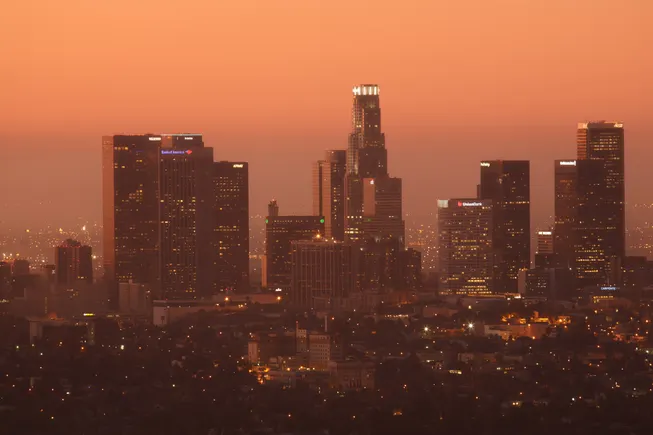
The January wildfires in the Pacific Palisades and Eaton communities dealt a direct blow to the city's hotel industry. Hotels played a critical role in disaster recovery, providing lodging for evacuees and first responders. Meanwhile, according to the American Hotel and Lodging Association, the devastating fires led business and leisure travelers to cancel hotel reservations, posing challenges for Los Angeles' tourism sector.
A slow return of visitors could significantly impact Los Angeles hotels, as experienced in Maui, Hawaii, following the deadly fires in August 2023. However, the tourism setback is not the only challenge currently facing Los Angeles hotel owners.
The January wildfires highlighted several unique issues facing Los Angeles hotel operators, including rising labor costs in a high-inflation environment and increasing insurance expenses as natural disasters become more frequent.
Local hotel industry leaders from the Los Angeles Hotel Association, the California Hotel and Lodging Association, and CBRE, along with Rosanna Maietta, CEO of the American Hotel and Lodging Association, shared with Hotel Dive the risks facing Los Angeles' hotel industry if these growing threats persist.
Challenges facing Los Angeles' tourism industry
According to the American Hotel and Lodging Association, Los Angeles' hotels, travel, and tourism industry employs over 540,000 workers and generates billions in revenue, but has been severely impacted by the January wildfires.
The disruption to Los Angeles' tourism industry—called the city's "lifeline" by Adam Burke, CEO of the Los Angeles Tourism and Convention Board—comes at an inopportune time. Maietta of the American Hotel and Lodging Association told Hotel Dive last month that as of January, Los Angeles still needed to "work hard to catch up" to recover tourism levels severely impacted during the COVID-19 pandemic.
"Even before this disaster, Los Angeles was lagging behind all major cities in post-pandemic recovery—ranking near the bottom in returning to pre-pandemic tourism levels," Maietta said.
According to the latest annual data collected by the Los Angeles Tourism and Convention Board, 49.1 million people visited Los Angeles in 2023, recovering to 97% of 2019 levels. The board's data shows that while domestic visitor volume fully recovered that year, international tourism only recovered to 79% of pre-pandemic levels.
In a January 24 letter to the Los Angeles City Council, the Los Angeles Hotel Association detailed that if the slow return of visitors due to the January wildfires persists, the long-term impact on Los Angeles' hotel industry could be devastating, endangering tens of thousands of jobs and affecting the city's ability to host major events such as national conventions, the 2027 Super Bowl, and the 2028 Olympics. The Los Angeles Hotel Association wrote that the impact of the Maui fires could foreshadow how the January fires might "devastate our economy." The association noted that in the months following the fires, Maui's tourism levels significantly declined, leading to lower hotel occupancy, which in turn caused revenue losses for the region's hotel industry and affected local employment.
However, Los Angeles' situation is not entirely the same as Maui's. While the January fires led to reduced working hours for workers across various industries in Los Angeles, according to ADP payroll data, average working hours for leisure and hospitality workers increased during the weeks of January 5, 12, and 19.
Nevertheless, Maietta told Hotel Dive that hotel operators' "ability to continue surviving and employing existing staff is at risk," noting that owners in the city are currently experiencing some "very heavy financial burdens and challenges."
Concerns over rising labor costs
Maietta noted that in the long term, hotel operators are concerned about rising labor costs. And it's not just Los Angeles hotel operators who are worried; Lynn Mohrfeld, CEO of the California Hotel and Lodging Association, told Hotel Dive that labor costs are a statewide issue.
"Since the pandemic, costs have risen faster than average income growth," Mohrfeld said, noting that about 50% of a hotel's costs are typically labor costs, and these costs are "becoming increasingly expensive."
"Labor costs are one of the items hotel operators and owners are really trying to manage, [while] being as genuine as possible with our employees, but also being aware of the business realities," Mohrfeld said.
According to the American Hotel and Lodging Association's "2025 State of the Industry Report," hotels nationwide paid a record $125.79 billion in wages, salaries, and other compensation in 2024. Despite paying more, hotel owners faced labor difficulties throughout the year as workers demanded higher wages to cope with rising living costs.
In July 2023, thousands of Los Angeles hotel workers went on strike demanding higher wages, and union workers in other parts of California also went on strike in 2024 for similar reasons.
According to RentCafe data, the cost of living in Los Angeles is 8% higher than the California average and 50% higher than the national average.
Mohrfeld stated that the current economic environment has created a "perfect storm" where neither local hotel owners nor workers are satisfied.
"The prices of eggs and gas haven't gone down, so [workers'] costs have risen, and hotels have fewer visitors, so their costs are also rising," he explained.
Insurance rates peak
Multiple sources told Hotel Dive that Los Angeles hotel owners are also concerned about rising insurance costs. This cost is climbing as natural disasters like wildfires become more frequent.
"The disaster issue truly deeply affects our hotel operator community, especially because obtaining insurance is becoming increasingly difficult," Maietta told Hotel Dive.
Brandon Fenner, Senior Director and Business Leader of CBRE's West Region Hotel Valuation and Advisory platform, told Hotel Dive that natural disasters, "whether fires in California or floods and hurricanes in the Southeast," are a huge driver of rising insurance costs across the hotel industry.
According to CBRE data obtained by Hotel Dive, California hotel insurance costs rose 28.1% year-over-year in 2023, higher than the national average increase of 19%. However, in 2024, California hotel insurance costs rose 11.8%, lower than the national average increase of 25.7%.
"The disaster issue truly deeply affects our hotel operator community, especially because obtaining insurance is becoming increasingly difficult."
— Rosanna Maietta, CEO of the American Hotel and Lodging Association
According to a 2024 CBRE report, in addition to natural disasters, supply chain disruptions and post-pandemic labor shortages have also driven up insurance costs. These challenges have increased the cost of construction-related goods and services, leading to higher building valuations, which in turn have pushed up insurance rates.
However, Mohrfeld noted that rising insurance costs alone have not prevented hotel operators from expanding in California.
Fenner expressed a similar view: "I wouldn't say insurance is a specific reason not to develop or invest in hotels in California, because insurance is rising nationwide. There may be other reasons, such as labor being more expensive in major California cities. But in certain markets, the average daily rates you can charge are also significantly higher, so it's always a balance."
"Insurance costs are largely what they are, and hotels need to be insured for various reasons," he added. "[The question comes down to], where else can you preserve your profit margins?"
Calls for City Council action
In response to the financial burdens following the January wildfires, the American Hotel and Lodging Association and the Los Angeles Hotel Association believe the Los Angeles City Council can help.
"Many hotel operators across the city now face their own financial uncertainty due to the fires, and unless the City Council acts swiftly, they fear for their ability to continue operations," the American Hotel and Lodging Association wrote in a February 12 letter to the City Council.
In their respective letters, the Los Angeles Hotel Association and the American Hotel and Lodging Association urged the City Council to suspend city-level tenant requirements and the Hotel Worker Protection Ordinance so that hotel operators can provide long-term accommodations for displaced individuals during the recovery period.
"These rules are not suitable for long-term stays, nor for staffing hotels at reduced occupancy rates," the Los Angeles Hotel Association wrote. "These rules make it difficult for hotels to accept Federal Emergency Management Agency vouchers and government recovery bookings, especially for mid-sized hotels near the fire-affected areas, as they find it harder to absorb bookings at rates well below market value while also bearing the additional labor costs required to meet the Hotel Worker Protection Ordinance requirements."
Earlier this month, California Governor Gavin Newsom extended the suspension of city-level laws in Los Angeles and Ventura counties that treat long-term occupants of short-term accommodations as tenants.
The organizations also requested a one-year pause on considering amendments to the Hotel Worker Minimum Wage Ordinance, which is scheduled to gradually raise the minimum wage for employees at Los Angeles hotels with more than 60 rooms starting July 1.
"Many submarkets in Los Angeles have been severely impacted by the fires, and given the combined effects of evacuation closures, booking cancellations, and uncertainty about the return of business in the coming months, many properties are uncertain about their future operational viability," the American Hotel and Lodging Association wrote. "The current economic situation makes it increasingly difficult for hotels to absorb additional costs without facing further layoffs and potential closures."
The current economic environment also makes it increasingly difficult for hotel workers—whom local union leader Kurt Petersen called the "backbone of [Los Angeles'] thriving tourism industry"—to live comfortably.
In a statement released by the workers' union Unite Here Local 11 after the City Council approved the Hotel Worker Minimum Wage Ordinance last December, Petersen said the move is "a critical first step in ensuring that major events like the Olympics improve the lives of Los Angeles' working class, by providing affordable housing and good jobs, rather than just enriching the tourism industry's CEOs."
