
Marriott CFO and Industry Experts Interpret the CitizenM Acquisition
Marriott International announced the acquisition of Dutch lifestyle hotel brand CitizenM for $355 million, with the transaction expected to close later this year. The move is seen as a significant step in Marriott's positioning within the competitive lifestyle segment, while also reflecting broader trends in the hotel industry, including a shift toward value-driven lifestyle offerings, scaling through consolidation to expand loyalty programs, and catering to the needs of a new generation of travelers. Marriott's Chief Financial Officer Leeny Oberg and several industry experts shared their views on the deal with Hotel Dive, covering its strategic value, potential overlap risks with the Moxy brand, and the future direction of industry consolidation.
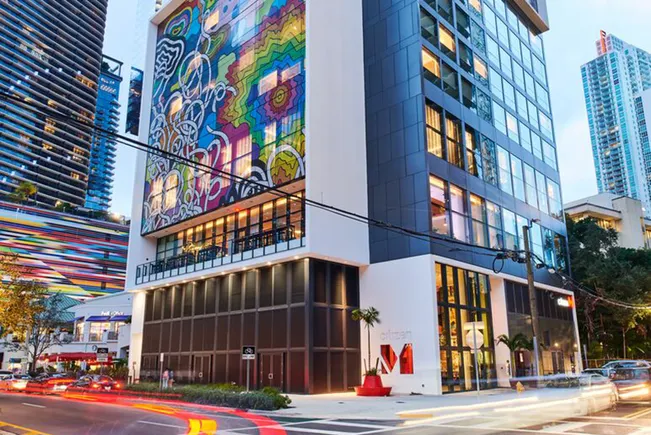
On Monday, Marriott International announced plans to acquire Netherlands-based CitizenM for $355 million, drawing widespread attention in the hospitality industry. The deal aims to strengthen the hotel giant's portfolio in the competitive lifestyle segment.
Under the agreement, the transaction will add 36 select-service lifestyle hotels across the United States, Europe, and Asia-Pacific to Marriott's portfolio, along with three hotels under construction (expected to open in 2026). CitizenM's global footprint covers major city destinations such as New York, London, and Paris.
Marriott announced on Monday that the deal is expected to close later this year. At that time, Marriott will acquire the CitizenM brand and related intellectual property, while CitizenM will continue to own the related real estate and operate these hotels.
Several industry professionals told Hotel Dive that the Marriott-CitizenM deal highlights several macro trends in the hotel industry: a shift toward economy lifestyle products, consolidation as a means to scale and enhance customer loyalty, and catering to the next generation of travelers through unique design and tech-driven lodging experiences.
Following Marriott's announcement, Hotel Dive spoke with several industry executives about the appeal and challenges of brand integration, including the risk of brand cannibalization. Meanwhile, Marriott CFO Leeny Oberg also revealed the strategic considerations behind the deal.
"I thought the buyer would be Hyatt"
As the latest example of a recent wave of brand consolidation in the lifestyle segment, Marriott's acquisition of CitizenM did not surprise industry leaders.
Dan Peek, President of JLL's Hotels & Hospitality Group for the Americas, told Hotel Dive that the CitizenM brand possesses several desirable traits that make it an attractive investment target.
Similarly, hotel consultant, founder of Meridian Thinking, and former Choice Hotels International executive Philipp Mirow said, "I wouldn't say it was a huge shock." However, Marriott as the acquirer did surprise Mirow.
"I thought the buyer would be Hyatt," Mirow said. He added that CitizenM's signature "accessible luxury" product could have complemented Hyatt's portfolio well.
Mirow said, "Hyatt remains one of the key players to watch outside of Marriott and Hilton because it has invested heavily in the lifestyle space."
In addition to its acquisition of Standard International in August, Hyatt Hotels Corporation has acquired several well-known lifestyle brands in recent years, including Dream Hotel Group, Mr & Mrs Smith, and German brand Me and All Hotels.
However, Marriott has also completed a series of brand deals recently. In December, it acquired Postcard Cabins and simultaneously reached an agreement with Trailborn. Additionally, in August, Marriott signed a long-term agreement with Sonder, which is currently in its final stages. Hilton and IHG Hotels & Resorts have also expanded through brand acquisitions recently.
Mirow noted that it was inevitable for a hotel company to acquire CitizenM, as the lifestyle brand had been seeking investment for some time.
He said the deal "aligns with the trend we continue to see in the industry, which is consolidation among major players and the shift and focus toward lifestyle."
This shift has led to what Sid Narang, Managing Director at private investment firm Crescent Capital Ventures and former executive at SBE, Starwood, and W Hotels, calls the "lifestyle wars": an ongoing competition among lifestyle brands for customers and their wallet share, customer funds and business, lender capital, talent, and other key resources.
Narang told Hotel Dive, "As organic growth dries up, companies are exploring bolt-on acquisitions to bolster their pipelines, especially in the lifestyle space—which continues to attract Gen Z and also offers significant growth opportunities overseas."
"A smart acquisition"
According to Mirow, Marriott's acquisition of CitizenM will enable it to accelerate global expansion, particularly in markets where it is evenly matched with competitors.
Mirow said, "The European market is territory that Marriott and Hilton have been fighting over, so this is a smart acquisition for Marriott because it increases the number of rooms Marriott has available in those markets." He added that the European market "is largely dominated by independent hotels and local operators, so neither Marriott nor Hilton has been able to establish a foothold as they have in the Americas."
Assuming the CitizenM deal closes this year, Marriott currently expects its full-year 2025 net rooms growth to be near 5%, the company said.
"Fundamentally, no brand will succeed if the acquirer cannot scale it while protecting the soul of what made the brand successful in the first place."
—Philipp Mirow, hotel consultant and founder of Meridian Thinking
However, the CitizenM deal will not only expand Marriott's physical footprint. Narang said it will also "feed its loyalty program."
CBRE reported earlier this month that hotel brand partnerships drove a surge in loyalty program membership in 2024. According to Skift, Marriott Bonvoy currently leads similar programs with 228 million members.
Despite already being in a leading position, loyalty growth remains a top priority for Marriott. A week before the CitizenM acquisition announcement, Marriott's Chief Development Officer Noah Silverman told Hotel Dive that Marriott Bonvoy provides the company with a "true competitive advantage" and drives its success.
JLL's Peek noted that Marriott's acquisition of CitizenM could be particularly attractive as it seeks to build loyalty among Gen Z travelers.
"This is largely about how Marriott views its appeal to the next generation of travelers," Peek explained. Younger travelers want hotels with cool, vibrant, and approachable public spaces. "CitizenM is part of this ongoing evolution."
Mirow also agreed that "vibrant public spaces" (including its rooftop bars) are a major draw for CitizenM, saying the brand has been an "inspiration" for other lifestyle operators in this area.
Marriott CFO Leeny Oberg said the experience and design CitizenM offers are exactly what Marriott hopes to leverage. She told Hotel Dive on Monday that the brand "really hits the mark, and we're very excited to bring it into our portfolio."
She added that customers today "really appreciate high-tech experiences, but also great design and style." According to Oberg, the deal aligns with Marriott's strategy of offering guests a full range of experiences, price points, and location choices.
"Isn't there a concern about brand cannibalization?"
However, Marriott already has a brand very similar to CitizenM—Moxy Hotels. Experts say the hotel company now faces the challenge of ensuring Moxy and CitizenM complement each other rather than cannibalize each other.
Select-service brand Moxy launched in Milan in 2014 and currently has more than 135 open hotels across over 25 countries and regions.
Mirow said, "Both brands are urban-focused, targeting younger consumers. Both emphasize public spaces. Both have iconic room designs with a much smaller footprint."
Narang said having more brand options—even if similar—could be good for Marriott Bonvoy members, but "if you're an owner or investor, aren't you worried about customer cannibalization?"
Mirow noted there are some differences between the two. He said, "CitizenM leans more toward business travelers, while Moxy is a more playful, energetic party brand."
Oberg echoed this sentiment, saying that while both select-service brands emphasize lifestyle, they have different focuses. "Moxy's focus is more on playfulness, while CitizenM focuses on its high-tech experience and truly focuses on design and style," she said.
Mirow noted that to successfully differentiate the two, Marriott needs to preserve CitizenM's brand identity and integrity.
Mirow said, "One of the potential failure points is that Marriott over-engineers this (CitizenM) brand, stripping away some of the essential luxury traits and uniqueness that stand out to its followers and travelers. Fundamentally, no brand will succeed if the acquirer cannot scale it while protecting the soul of what made the brand successful in the first place."
Oberg explained that this won't be a problem for Marriott. "We have a strong track record of acquiring brands and growing them as part of our overall system, while also maintaining what makes those brands distinctive and appealing to guests," she said.
"A stunning deal"
Experts say that as brand consolidation remains the fastest way for companies to scale and hedge against market volatility, the challenge of brand cannibalization will continue to confront hospitality players.
"I don't see a reason for (consolidation) to stop," Narang said. "As demand softens and uncertainty persists, this will impact growth, prompting large companies to look very carefully at their brands and think: 'Do we have brands that give us pricing power?' Because at the end of the day, it's all about pricing power."
Peek said major brands will continue to strategically pursue growth opportunities. "If you're Marriott or Hilton, when you see a project with good growth prospects and a meaningful scale, and you think it fits your company, I think you go after it," he said.
"As organic growth dries up, companies are exploring bolt-on acquisitions to bolster their pipelines, especially in the lifestyle space—which continues to attract Gen Z and also offers significant growth opportunities overseas."
—Sid Narang, Managing Director at private investment firm Crescent Capital Ventures
Narang said New York-based Ace Hotels or London-based Yotel could be the next targets for acquisition by major hotel groups. He added that more "stunning deals" may emerge in the future.
Narang believes that from a capital perspective, it is entirely possible for Marriott, Hilton, or Accor to acquire a larger brand owned by non-traditional hotel owners such as Four Seasons Hotels and Resorts or Rosewood Hotels.
"These brands are out there. That doesn't mean they're all for sale. They may not be for sale, but they're highly attractive right now," Narang said. "Why not these brands? Why not engage with these parties and explore a reasonable price?"
