
Nashville Hotel Market Watch: Convention Engine Drives Development Boom
Since former Mayor Phil Bredesen's vision in 1992, Nashville has built large sports venues and a convention center, fueling prosperity in tourism and the hotel industry. In 2025, visitor numbers are projected to reach 17.3 million, with hotel development volume ranking second in the U.S. Conventions, corporate relocations, and diverse events are core demand drivers, attracting upscale and boutique hotels. Industry insiders generally express confidence in the market's resilience, believing there is still room for growth.
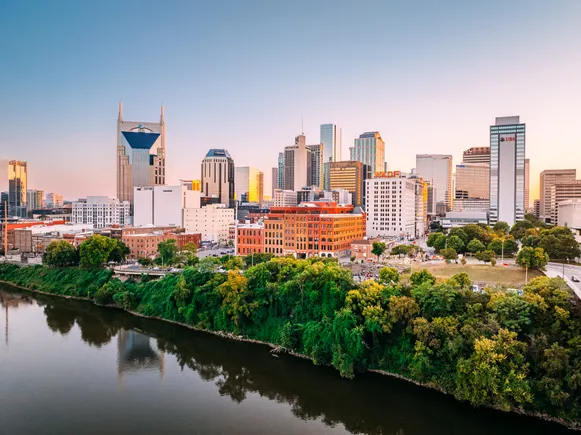
In 1992, Nashville, Tennessee, had just elected Phil Bredesen as its new mayor. Lisa LeClair, a hospitality industry professional, attended a meeting where he spoke.
"He said, 'I want you to close your eyes and take a tour with me,'" LeClair told Hotel Dive. The mayor then had everyone in the room imagine a bustling future Nashville: beautiful parks, sports teams with dedicated venues, large event spaces, and vibrant dining districts.
"We all thought, 'Yeah, right,'" laughed LeClair, who now serves as president and CEO of the Greater Nashville Hospitality Association. But Bredesen's vision eventually became reality. Within a few years, the city built the 20,000-seat Bridgestone Arena, the 69,000-seat Nissan Stadium, and the 2.1-million-square-foot downtown convention center that opened in 2013.
"The convergence of all these things is really what put us on the map," LeClair said.
Now, those developments are paying off in terms of visitation, visitor spending, and hotel demand. Hotel Dive spoke with hospitality and real estate professionals to explore how Nashville's events market is driving a hotel development boom, and where the city's bustling hotel scene is headed next.
Event-driven travel
As of March, Tourism Economics projected that Davidson County, home to Nashville, would welcome a record 17.3 million visitors in 2025, a 2.5% year-over-year increase, with about 67% staying overnight, according to the Nashville Convention & Visitors Corp (NCVC).
Of those overnight visitors, 35% are traveling for groups and business, while 65% are traveling for leisure. Overall, visitors from at least 50 miles away are expected to spend about $11.5 billion this year at the city's hotels, restaurants, and attractions, a 3.2% increase year-over-year, per NCVC data.
Events in particular are driving visitors to the city, with 62.5% of visitors saying they will attend festivals and special events in Nashville, according to NCVC. But LeClair said that wasn't always the case.
"When the convention center opened in 2013, there weren't enough hotel rooms in the downtown core to accommodate guests coming for conventions and large groups," she said. But since then, "they've been building," LeClair added, with convention hotels including the Omni Nashville Hotel, Grand Hyatt Nashville, and JW Marriott Nashville opening their doors.
Earlier this month, the three aforementioned hotels, along with the Renaissance Nashville Hotel, were named to Cvent's 2025 Top Meeting Hotels in North America, collectively occupying the top four spots on the 250-hotel list.
"There's a reason they're all in Nashville," said Carter Gladwell, senior director of hospitality at Walker & Dunlop, referring to the properties on Cvent's top meeting hotels list. "If you look at the engine room behind Nashville, it's the convention and conference center market in the U.S., especially today."
Cvent ranked the city of Nashville fourth in the nation in its meeting destination rankings released this month, citing the city's "easy accessibility and diverse lodging" as reasons.
Strong development pipeline
Development hasn't stopped at convention hotels. Nashville is projected to be the U.S. city with the second-most new hotel room openings in 2025, behind only New York City, according to CoStar. CoStar predicted in February that the city would add approximately 2,849 rooms this year, with the majority in the upper-midscale and upscale chain scales.
Luxury and boutique hotels are also entering the market, including a 326-room luxury hotel and residential project from Pendry Hotels & Resorts announced this spring. The project, slated to open in 2027, will feature 180 rooms and 146 residences in the city's growing Paseo South Gulch district.
"Nashville has evolved into a luxury market," Gladwell said, calling it "one of the fastest-growing luxury markets in the U.S."
Meanwhile, Marriott International and Turnberry plan to break ground this year on the 177-room St. Regis Nashville. Country music star Dolly Parton is also getting in on the act, with her SongTeller hotel slated to open in 2026.
As of April, Nashville had 14 hotels under construction, 24 in final planning stages, and 50 in the planning stages, according to NCVC data.
"Nashville has evolved into a luxury market, one of the fastest-growing luxury markets in the U.S."
— Carter Gladwell, senior director of hospitality at Walker & Dunlop
The development boom is supported by strong city and state-level growth. Tennessee was ranked the third-best state economy in the nation last year in CNBC's annual "America's Top States for Business" ranking. Davidson County's population growth is also the fastest in the state, according to the Tennessee State Data Center.
"The city has not only matured significantly, but it's expanded, and in expanding, it brought luxury with it," Gladwell said.
"[Nashville] has consistently produced very strong returns for developers," said Keith Kurland, senior managing director and co-head of Walker & Dunlop's New York capital markets group. The firm has facilitated billions of dollars in development financing in Nashville over the past five years, including the Pendry project.
Kurland noted that Nashville's favorable business climate has prompted several companies to relocate to the city, and the impact hasn't fully materialized yet.
The city already hosts corporate headquarters for companies like Dollar General, Nissan Motor Co. (North America), and Tractor Supply Company. In 2022, research and global investment firm AllianceBernstein moved from New York to Nashville. More companies are on the way: Last year, Austin, Texas-based Oracle announced it would move its global headquarters to a 65-acre campus in Nashville, according to CNBC; In-N-Out will open an eastern corporate office next year, per Fox Business.
Kurland said these moves will drive further growth.
"The corporate relocations have been announced, and work is underway, but those jobs haven't even hit the market yet," he said. "When all these workers are actually living in Nashville, and all those big companies are hosting events and having people come visit... that part of the impact hasn't even come yet."
Demand drivers
According to Gladwell, diverse demand drivers make Nashville an attractive destination for capital investment.
"Yes, it's known for entertainment, conventions, and conferences, but it's highly diversified now, and that's what attracts new development, new brands, and institutional and private capital," he noted.
LeClair also said the events driving leisure travel to the city have diversified.
"We have a wide variety of experiences," she said, pointing to the newly opened The Pinnacle at Nashville Yards, which adds a "smaller, more intimate" event venue to the city.
"So in addition to those big venues that hold 60,000 to 70,000 people, we have these beautiful smaller event spaces, and of course, those honky-tonks," she added, noting the result is weekends that stretch from Thursday through Sunday. "You can go downtown on a Thursday and see the difference, knowing the weekend is coming."
"The big brands still dominate, so there's room in the market for more creative, independent brands."
— Phillip Bates, CEO of TMC Hospitality
LeClair also noted that the nightlife-oriented city places a strong emphasis on safety and security, mentioning the appointment of its first "night mayor" in 2022.
Meanwhile, Nashville is also investing in further developing its sports offerings, with the Tennessee Titans set to move into a new $2.1 billion stadium in 2027, according to Construction Dive.
"Music City overall is getting better and better at sports of all kinds," Lisa Bush, director of sales and marketing at Thompson Nashville, told Hotel Dive earlier this month, adding that the city's Geodis Park soccer stadium, which opened in 2022, has drawn more sports fans to her hotel.
Despite the additional hotel supply in recent years, "there's still a lot of room for growth in the hospitality industry," said Phillip Bates, CEO of TMC Hospitality. The company brought its boutique brand Drift Hotels to the city last year.
"The big brands still dominate, so there's room in the market for more creative, independent brands," Bates told Hotel Dive.
"I think we're going to see things continue to escalate," he added. "Nashville already has an amazing tourism base, and these next phases of growth are only going to build on that momentum."
Walker & Dunlop's Kurland and Gladwell also see a strong outlook for Nashville's hotel market — even when asked how tourism headwinds are impacting travel volumes in the U.S.
"Investment in the U.S. is very market-by-market and asset-class-by-asset-class," Kurland said. "But Nashville has been very resilient, and we think we're going to remain very bullish."
