
Market Focus: Dallas-Fort Worth Metroplex Hotel Industry Continues to Heat Up
The Dallas-Fort Worth Metroplex has become a popular tourist destination in recent years, with a surge in business and leisure travelers driving improved hotel performance. Dallas leads the national hotel construction pipeline with 189 projects under construction, and multiple corporate relocations are boosting business demand. Experts expect the market to continue growing in 2024, with active investment activity but a lack of distressed assets.
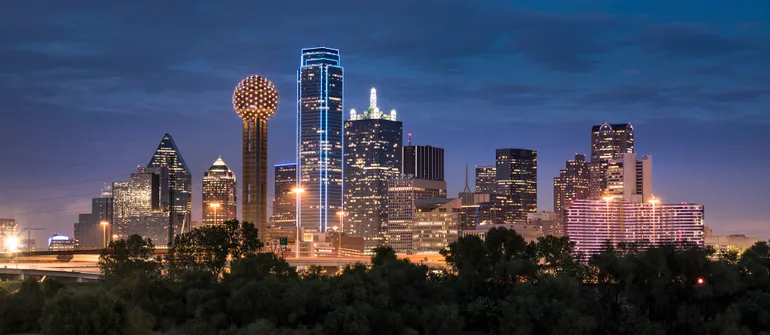
The Dallas-Fort Worth metroplex has become a popular tourist destination in recent years, with visitors flocking in for entertainment, sporting events, or business activities. The influx of tourists to both cities after the pandemic has boosted hotel performance, and investment and development activities have also become more active.
According to Lodging Econometrics data, as of the third quarter of this year, Dallas's hotel construction pipeline ranked first in the nation. Many large companies have moved into the city, and the return of business travelers is evident. Hotel industry experts shared their observations on this "strong" market with Hotel Dive, as well as their growth expectations for 2024.
Demand growth
According to data from the two cities' tourism boards, both leisure and business travelers are visiting the Dallas-Fort Worth metroplex in large numbers, driving up hotel revenue. Visit Fort Worth data shows that Fort Worth welcomed 10.8 million visitors in 2022, with direct visitor spending growing 25% year-over-year for the second consecutive year. In 2022, tourism's economic impact on the city exceeded $3 billion for the first time.
Visit Dallas told Hotel Dive that Dallas hosted 25.7 million visitors in 2022, a 14% increase year-over-year, with a tourism economic impact of $9.6 billion. By the end of 2022, Dallas hotel revenue reached $1.12 billion. Craig Davis, the bureau's president and CEO, expects this figure to reach a record $1.25 billion by the end of 2023, approximately $200 million above 2019 levels.
Overnight visitors come for both leisure and business purposes, but according to Brian Nordahl, executive vice president of CBRE's Hotels Institutional Group and head of the Texas region, business travelers are the main driver of the surge in visitors. Nordahl noted that multiple corporate relocations and an increase in meetings and events have driven a significant recovery in Dallas business travel, boosting hotel occupancy in the downtown and Uptown areas.
"Dallas is undoubtedly one of the strongest markets in the nation," Nordahl said. In terms of growth, the market trails only New York City, which is "performing extremely well." He added, "Dallas is becoming a hub for professional services... a large number of companies are moving in, significantly driving up demand."
Between early 2021 and November 2023, nearly 20 companies relocated their headquarters to Dallas, including AECOM and Frontier. Both Nordahl and Davis noted that business travel growth has been complemented by growth in group travel. Davis said hotel revenue growth "is largely thanks to the recovery of meetings and events."
"There is more group business coming to Dallas than ever before," Nordahl said. "Many people have found Dallas to be an ideal meeting location due to airport accessibility and ample hotel supply. Interestingly, Dallas has also become a popular choice for weekend getaways, with weekend demand rising significantly." Some travelers come for business but stay for leisure. Nordahl added that Dallas's entertainment venues, sports teams, dining, and cultural activities make it a top destination for many travelers.
Although Dallas occupancy rates remain below 2019 levels, RevPAR and ADR in 2022 have both exceeded pre-pandemic levels. Fort Worth is in a similar situation, with The Wall Street Journal having called it the fastest-growing large city in the United States. Nordahl noted that Fort Worth is also in a business travel boom, with active development around the convention center.
CBRE forecasts continued performance growth for the metroplex in 2023 and 2024. Davis agrees: "All signs indicate we will surpass 2023."
Expanding construction
Over the past year, hotel development in the Dallas-Fort Worth metroplex has surged, with Dallas leading the nation in the largest hotel construction pipeline. According to Lodging Econometrics data, as of the end of the third quarter of this year, Dallas had 189 pipeline projects totaling 21,840 rooms, an all-time high. The city leads the nation in both the number of projects scheduled to break ground within the next 12 months and projects in early planning stages. However, New York City, which also grew significantly over the past year, led Dallas, Phoenix, and Atlanta in the number of projects under construction as of the third quarter of 2023.
Recent Dallas hotel projects include: the JW Marriott Dallas Arts District (267 rooms), which opened in the spring; the boutique hotel Hôtel Swexan (134 rooms); a planned new Four Seasons resort in Turtle Creek (240 rooms); a dual-branded AC Hotel by Marriott/Moxy in Uptown (260 rooms); and an InterContinental hotel being developed within the existing Cityplace Tower. Just last month, Choice Hotels expanded its upscale Cambria brand into the market with two groundbreaking ceremonies; the Ritz-Carlton, Dallas also completed a multi-million-dollar renovation involving 218 guest rooms and suites, the lobby, public areas, corridors, and the Ritz-Carlton Club lounge.
"The quality of hotels in Dallas has improved significantly, and these new projects will further solidify its reputation," Nordahl said. "Dallas has many beautiful hotels, and there is no doubt these new additions will take the standard to new heights."
Fort Worth is also seeing active development, with Nordahl noting that the city is moving toward luxury and lifestyle offerings. He mentioned that The Crescent Hotel, Fort Worth will "make a huge splash," as well as the luxury Bowie House (part of Auberge Resorts Collection), which opened on December 1.
Investment potential
On the investment front, Dallas is experiencing what Nordahl calls a "window of opportunity." He noted: "There has been quite a bit of transaction activity in the market over the past 12 to 18 months, but it hasn't been particularly strong, because there are no truly distressed assets in the Dallas market right now." Due to the current financial environment and rising interest rates, many investors are seeking value-add or low-volatility properties with repositioning potential. But Nordahl believes investors may find it difficult to find such opportunities in Dallas because "the market is too strong."
Nevertheless, major deals have still been completed. Driftwood Capital, a Florida-based commercial real estate company, acquired the Hilton Dallas/Plano Granite Park (299 rooms) in June. According to a mid-2023 report from commercial real estate investment brokerage Marcus & Millichap, buyers have also been actively acquiring mid-scale and upscale assets in the greater Dallas area, as well as low-cost economy properties in Fort Worth. The company said that over the past year, multiple assets near the eastern segment of I-35 and the southern segment of I-635 in Dallas have frequently changed hands due to convenient access to Dallas-Fort Worth International Airport and Dallas Love Field. The report noted that with DFW Airport planning to invest over $4 billion in expansion by 2026, investment activity along these transportation corridors may continue.