
Why did the AI travel company relaunch the Sonder brand?
Last week, the news that the Sonder brand was acquired by TravelAI and transformed into an AI travel guide surprised the industry. The Vancouver-based company saw the residual brand value left by the tens of millions of dollars in marketing that Sonder invested before bankruptcy. TravelAI co-founder and CEO John Lyotier explained the acquisition decision, brand positioning, and the role of AI in travel planning in an interview.
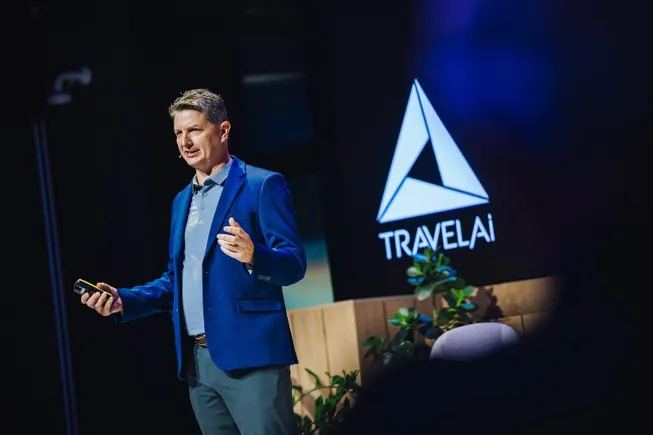
Last week,the news that the Sonder brand was getting a second lifesurprised some in the hospitality industry—especially since it would reappear in a new form as an AI-driven travel guide.
The original Sonder was founded in 2014 as an apartment-style accommodation provider,and came to an end in November 2025after its licensing agreement withpartner Marriott Internationalwas terminated, followed by a bankruptcy filing. Althoughhotel companies such as Kasa took over some Sonder properties,the brand still carried weight with travelers, even though it had failed as an operator.
In fact, according to TravelAI co-founder and CEO John Lyotier, Sonder invested millions of dollars in marketing strategies during its operations, generating "residual traffic and residual brand value."
That is also a key reason why Vancouver-based TravelAI decided to acquire the Sonder brand and intellectual property, and relaunch Sonder.com as an AI-driven city accommodation guide.
Hotel Dive spoke with Lyotier to learn about TravelAI's plans for Sonder, why he is betting on the brand, and where he thinks AI and travel planning are headed.
This interview has been edited for clarity and brevity.
Why acquire the Sonder brand? Does it still have value?
JOHN LYOTIER:I have always been a fan of Sonder—I think they had a great brand and product, and it was really sad to see their side collapse.
"Many people don't even realize what actually happened with Sonder, so they are still searching for Sonder."
When we were looking for city brands, other parts of our network had almost no presence in the city market. We mainly focused on accommodations in beach or mountain destinations, and more on short-term vacation rental-centric business. When the big Sonder news came out, I started telling a colleague we were going to buy it, and we laughed it off at the time. But for me, it was exactly the perfect example of what we might do.
Going back to the question of why we acquired it—there really is residual traffic and residual brand value. I saw a report in 2024 showing that the organization spent $84 million on sales and marketing. The previous team invested heavily in brand and marketing, and that part didn't completely collapse when they went into receivership and bankruptcy last year, so the brand still has value. Many people don't even realize what actually happened with Sonder, so they are still searching for Sonder.
We are able to move forward with a very similar brand—design-focused, tech-forward—and communicate to the community: "Hey, the Sonder you loved is no longer the same operating entity or company, but with our technology, we can help you find that place that feels like Sonder to you."
Is the plan just to acquire the Sonder brand name? Not its properties?
Yes, exactly that. We don't operate physical real estate—that's someone else's game. We're not hotel operators; there are experts for that.
Our team has always been good at the distribution and marketing side, and we'll let others handle property operations. We operate and have fun in the digital world much more than in the physical world.
"The industry thinks AI will solve everything, but the biggest question you can solve is: Can it deliver a great traveler experience? Can it inject humanity into the machine?"
What was the purchase price for the brand and intellectual property?
A lot of people are asking, and what I will say is that we believe we got tremendous value. I have some fairly aggressive goals for this brand. I think within the next 12 months, the brand's total booking value can reach $100 million, and our payback period will be measured in months, not years. We think it was a bargain asset deal. Based on the feedback from the first 72 hours alone, I think others think so too.
What happens now when someone visits Sonder.com? How does TravelAI power it?
Our core belief is distribution. For us, distribution means finding high-intent travelers, but the boundary of distribution ends at the traveler's memory. So, we truly focus on memory infrastructure. As a traveler, you have your own constraints, desires, needs, personality, and all the information that makes up "you." How do we capture that and help you use it to get a better experience on our site and across the ecosystem?
We want to create this portable travel context, so we have a project calledtraveler.md[which is also integrated into Sonder.com] that allows you to plug your information into Claude, ChatGPT, or other AI agents to help personalize your travel experience. For us, we think in the agent era, memory is the most important thing. No matter which platform or model you interact with, can your experience be anchored to your travel behavior?
How does this memory infrastructure work specifically?
If you interact with Sonder, we start to personalize. We can find similar properties that match your taste. The more information you input, the higher the level of personalization. If you want to save and store that information, you can keep it in your own local AI system. But our system can extract your information from it.
As travelersincreasingly turn to AI for trip planning,what do you think the future of travel and AI looks like?
I think there are a few things hotel operators should pay close attention to. There is a lot of confusion or concern about travel shifting from Google searches to ChatGPT searches. But at the end of the day, there are still travelers taking real trips. The markets they choose may change, and the way you track them into a property may change. But ultimately, there is still a traveler there.
The industry thinks AI will solve everything, but the biggest question you can solve is: Can it deliver a great traveler experience? Can it inject humanity into the machine? From all this technology—whether it's the infrastructure we're building or not—the thing to focus on is: how do you use that technology to improve the guest experience? If you focus on that, you'll have more satisfied, happier guests. In that case, everyone wins.
