
What Facility Security Teams Can Learn from the Journalists' Association Dinner Shooting Incident
On April 25, during the White House Correspondents' Association dinner, a gunman was arrested by the Secret Service at the Washington Hilton Hotel. The incident exposed the complexity of security at large events, with experts emphasizing the value of technologies such as real-time information sharing and automated access control.
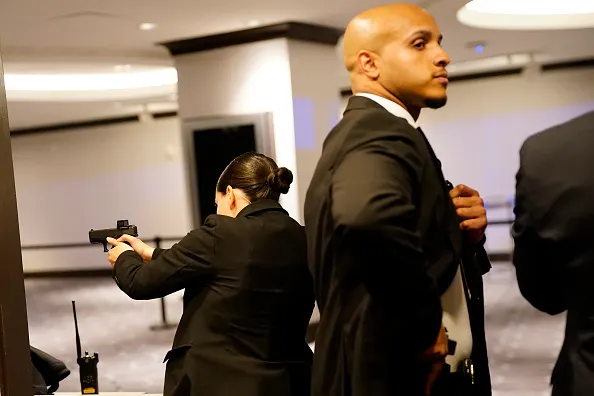
The U.S. Secret Service arrested a gunman suspected of attempting to assassinate President Trump and his cabinet members at the Washington Hilton Hotel on April 25. According to reports, the gunman faced increasingly tightened security measures as he approached the event area. Experts pointed out that this incident highlights the importance of communication among security teams, while new technologies can also help protect participants at large events.
The suspected gunman is 31-year-old Cole Tomas Allen from Torrance, California. He checked into the hotel, which has 1,107 rooms, the day before the event. Before attempting to enter the ballroom on Saturday night, he told family and friends in messages that the on-site security he observed reflected a level of "incompetence" he had not anticipated.
"I thought there would be surveillance cameras at every turn, rooms wiretapped, armed agents every 10 feet, and metal detectors everywhere," he said in the messages.
According to The Wall Street Journal, Allen was caught at the outer security ring on the hotel's ground floor. Acting Attorney General Todd Blanche, who attended the event, said on the program "Meet the Press" on April 26: "The system worked, and we stopped the suspect."
According to The Wall Street Journal, to enter the ballroom, Allen had to pass through the first security ring, go down a flight of stairs, pass through another security ring, and then open a door leading to the rear of the ballroom, which can accommodate 2,500 people. However, he was caught at the first level.
"He rushed past an initial group of loitering Washington, D.C. police officers," said Ken Dilanian, an MS Now reporter, on the April 27 program "Morning Joe." "But once he got past them, everyone drew their guns. Eventually, he was subdued."
In the days following the incident, lawmakers and others in Congress criticized the Secret Service for allowing the gunman to get that far. Joe DePaolo, editor-in-chief of Mediaite, said in an article the day after the incident: "Getting through... security was laughably easy. You just had to show—you didn't even need a dinner ticket or any pre-party ticket—just some evidence that you had legitimate business inside the Hilton on Saturday night."
Security experts told news outlets that actual protective measures were more extensive than what was visible, including an armored plate under Trump's seat, as reported by CNBC. ABC News reported: "The hotel... is inherently difficult to secure. Due to the nature of its ongoing operations... the Secret Service must balance its security needs with the hotel's needs."
Lessons for facility security teams
Michael Evanoff, chief security officer of cloud security company Verkada, told Facilities Dive that communication among security teams is key to securing such events. "Real-time information sharing is especially important when multiple agencies collaborate," said Evanoff, who was responsible for the security of U.S. embassies and NATO facilities before joining the tech startup last year.
During the event, there were at least three security teams in the hotel: the Secret Service, Washington, D.C. police, and hotel security. Some attendees, including CBS News editor-in-chief Bari Weiss and California Governor Gavin Newsom, also brought private security personnel.
Evanoff said automated access control can help reduce communication confusion and close entry points while security personnel try to assess the situation. "Having AI cameras with advanced alerts and detection is one thing, but connecting those systems to access control to trigger an immediate lockdown is entirely another," he said. Or the system could have an automated announcement function—"issuing emergency warnings through speakers," he said.
The Washington Hilton has hosted this annual dinner since the late 1960s. In 1981, after President Ronald Reagan was shot outside the hotel, the hotel underwent security-related renovations, at a time when he had just delivered a speech at a luncheon hosted by the AFL-CIO. The hotel built a private entrance with a covered vehicle-only passage. After passing through the passage, occupants enter a private lounge area inside the building, with elevators leading directly to the rear of the ballroom stage. "The president or protectee is never exposed to the outside," retired Secret Service Deputy Director A.T. Smith said in The Wall Street Journal report.
"This incident... reminds event venues to stress-test their protocols and infrastructure," Evanoff said. "The good news is that the Washington Hilton's layered protective rings worked, and the Secret Service stopped the attacker before he could cause harm."