
The Hidden Value of Human Touch in Hospitality
The industry is hotly debating AI applications in hospitality, from robot front desks to chatbots. However, for independent hotels, the more critical challenge lies in who can remedy issues before guests discover them when automated systems conflict or malfunction. Sirvoy's analysis of over 10,000 customer service conversations in 2025 shows that operators are not resistant to automation, but rather worry about the consequences of its failures. The data indicates that the value of human support lies in providing confidence, not speed or enthusiasm, especially when issues span multiple systems. As the industry moves into 2026, the discussion should shift from whether to accept AI to how technology can support human judgment at the most critical moments.
The following is a guest article by Mats Persson, co-founder and CEO of Sirvoy, a cloud-based hotel management system. The views expressed in this article are solely those of the author.
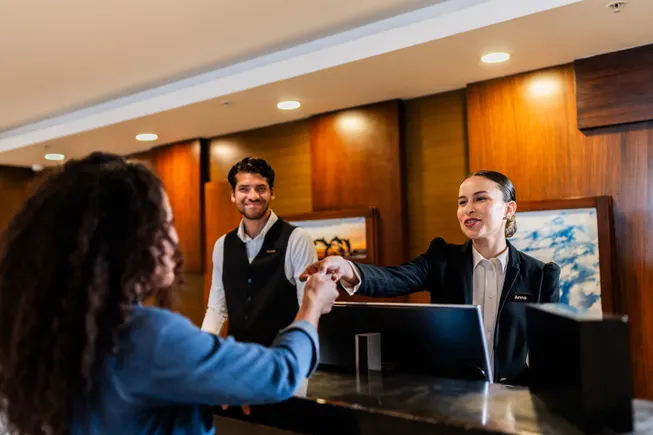
The hospitality industry is engaged in a high-profile discussion about artificial intelligence. From humanoid robots at check-in tochatbots answering guest questions, much of the focus is on how automation is reshaping front-desk services. This discussion is significant in itself.
However, for independent hotels, the more critical question lies behind the scenes: when automated systems conflict, create ambiguity, or fail unexpectedly, who can spot the problem before guests notice?
The frustration of automation
Broader consumer research shows thatfrustration with AI-driven customer service is spreading across industries. A recent cross-industry survey found that 75% of consumers believe automated responses fail to resolve their issues. In the hospitality industry, this frustration often first appears among operators.
Sirvoy analyzed over 10,000 online chat support conversations from independent accommodation businesses in 2025, specifically observing when operators seek human assistance. The findings indicate that accommodation providers are not resistant to automation, but rather anxious about the consequences when automation fails.
In many cases, operators seek help not because they don't know how to operate, but because the stakes are too high. When guests dispute charges, payments appear abnormal, or room availability is inconsistent across channels, hoteliers want to confirm they haven't made a mistake before guests notice.
In these conversation logs, language related to uncertainty and trust recurs. Words like "afraid," "worried," "confused," and "relieved" appear frequently, often followed by a sense of relief after human confirmation that everything is fine. In these moments, the value of support lies not in speed or enthusiasm, but in confidence—which often determines whether a problem stays behind the scenes or is exposed to guests.
This becomes even more pronounced when issues span multiple systems. A single booking may involve an online travel agency, a channel manager, a payment processor, and the hotel's own systems. When problems arise, operators often don't know which system the issue belongs to.
Human support remains valuable
If the problem lies between systems, automation within a single tool cannot solve it. In those moments, the most valuable human interveners are not the front desk greeting guests, but those who can see the full picture across system boundaries and say, "You didn't break anything; here's what actually happened."
This also explains why automation frustration in other areas affects expectations. Many operators, already worn down by self-service systems, seek support only to be bounced between help centers and automated responses. Human support appears valuable partly because of the stark contrast with these experiences.
Independent hotels rely on automation to survive. Tools that handle daily tasks, manage data, and reduce administrative burdens are essential. But the data suggests that the hospitality industry may be overestimating where automation creates the most value. The challenge isn't whether guests will accept front-desk AI—it's whether operators have a reliable safety net when automation creates uncertainty behind the scenes.
As the hospitality industry moves further into 2026, the focus of the discussion may need to shift: not away from AI, but toward how technology supports human judgment at the most critical moments. The systems that ultimately win won't be those that completely exclude humans, but those that ensure someone is always available when confidence, clarity, and accountability are put to the test.