
Mews Survey: Nearly All Hotel Operators Already Use AI, but Some Experiences Still Need Human Leadership
A survey by Mews of more than 500 hotel properties worldwide shows that AI has become standard in hotel operations, but hotel operators have a clear understanding of AI's boundaries: 59% believe front desk and check-in should be human-led. Hotels with formal AI policies have a trust level of 92%, while those without policies have only 49%.
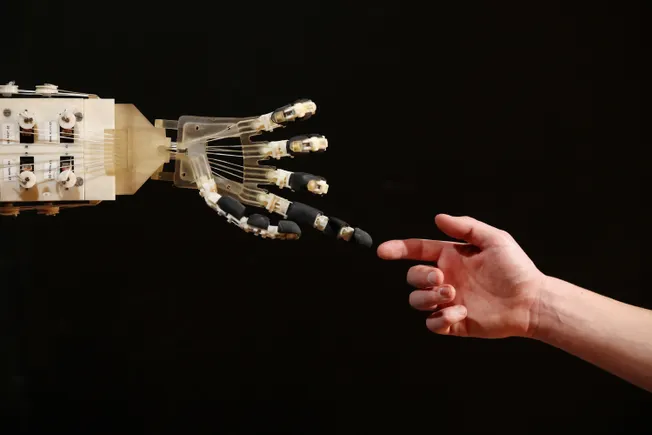
A new survey released by hotel software platform Mews shows that artificial intelligence has become a standard tool in hotel operations, but hoteliers also believe that some service areas still need to maintain a clear boundary between human and technology.
The survey, which covered more than 500 hotel properties worldwide, found that98% of hotel operators used artificial intelligence in their operationsbetween December 2025 and March 2026. Although AI is now ubiquitous at the operational level, hoteliers still insist that certain experiences require human involvement—the survey shows that 59% of respondents believe front desk reception and check-in should remain human-led.
This finding is particularly prominent among hotel properties that heavily use AI. Based on this, the survey speculates that the more familiar hoteliers are with technology, the more accurately they can judge which service areas cannot be replaced by human service.
Maturity of AI adoption
Wouter Geerts, Director of Market Research at Mews, said in a statement: "Hoteliers are optimistic about AI, willing to use it widely, and also have a very precise understanding of its role." He added: "The more familiar they are with AI, the stronger their confidence in using it, and the more firmly they believe that certain guest moments should retain human service. This is not resistance to AI, but a mature understanding of its uses."
This shift in attitude comes as more hoteliersseek to adopt AI technology. According to a report by Canary Technologies, most hoteliers this year plan toprioritize AI in their IT budgets。
Mews found that AI adoption rates are highest in upper-midscale, upscale, and luxury hotels. The Amsterdam-based company mapped 19 common hotel tasks onto a "frequency of use and comfort with full automation matrix." The survey also showed that AI has penetrated 11 of the 19 most common hotel tasks, covering front office, business, leadership, and food and beverage departments.
Tasks with low usage but high comfort with full automation include: maintenance scheduling, labor scheduling/payroll processing, and software coding. Tasks with high usage but low comfort with automation include: translation, price optimization, data analysis, email writing, content creation, and review management.
Priorities are shifting
The Mews survey also found that the overall sentiment toward AI in the industry is increasingly positive: 92% of hoteliers are optimistic about AI's application in the hotel industry, and 83% say they trust such tools to "assist decision-making."
However, governance mechanisms have not kept pace with adoption—41% of hoteliers say their organizations do not yet have a formal AI policy. The survey shows that when hotels have formal guidelines in place, trust in AI increases significantly: hotels with formal AI policies have a 92% trust level in AI, while those without policies have only 49% trust.
To coordinate industry action on AI,hotel technology expert Ira Vouk recently founded the AI Hospitality Alliance, which is expected to help hotels establish formal AI policies, or at least bring the topic to the agenda.
Additionally, Mews notes that as more hoteliers adopt AI, revenue growth is becoming their next priority. Among the most proficient AI-adopting hotel properties, 52% say they want AI to primarily support revenue growth, rather than efficiency gains or cost reduction.
Mews CEO Matt Welle said in a statement: "Over the past few years, the hotel industry has been solidifying its operational foundation. What we are now seeing is a shift in how hoteliers think about AI. The question is no longer 'whether to use AI,' but 'where AI can create the most value.'"
The report comes as various players in the hotel industry are trying to apply AI across operations and deepen their AI strategies. For example, Mews recentlylaunched a new AI-driven product called Mews Business Intelligence。
Wyndham Hotels & Resorts has alsolaunched its own native ChatGPT application, whileChoice Hotels International partnered with AWSto advance enterprise-level AI deployment. During the Q1 2026 earnings call,IHG Hotels & Resorts、HiltonandMarriott Internationalall promoted new AI tools.