
Mews Founder: How AI Deepens the Emotional Connection Between Hotels and Guests
Against the backdrop of the hospitality industry gradually shifting toward acceptance of AI, Mews founder Richard Valtr believes that AI's value should not be limited to efficiency and revenue, but should serve as a tool to deepen guest connections. Citing Mews survey data, he pointed out that 59% of hotel operators insist that experiences such as front desk and check-in should be human-led, while AI can learn customer needs through 'subtle signals,' assisting rather than replacing human service.
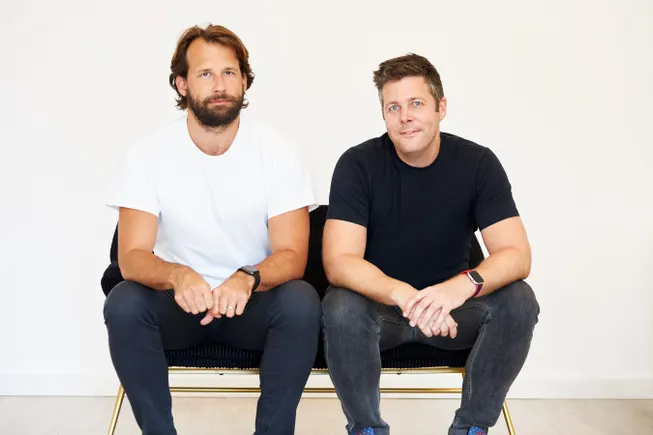
As hoteliers gradually shift their attitude toward AI to one of acceptance, a hotel technology founder believes they should move beyond a purely revenue-focused perspective and rethink the value of this technology.
Richard Valtr, founder of Amsterdam-based hotel software provider Mews, said hotels can use AI not only to maximize operational efficiency and revenue, but also to build deeper, more personalized connections with guests.
A recent Mews survey showed that 59% of hoteliers insist that certain experiences, including front desk reception and check-in procedures, should be human-led. The survey also found that the more familiar hoteliers are with AI, the more they value preserving this human interaction.
At the NYU International Hospitality Industry Investment Conference in New York last week, Valtr spoke with Hotel Dive about his views on common misconceptions about AI in the hospitality industry, and how the technology can learn from 'subtle signals' and foster more human-machine interaction.
This interview has been edited for clarity and brevity.
Insights from the Mews survey
HOTEL DIVE: Could you elaborate on Mews' recent survey and what stood out to you in particular?
RICHARD VALTR:It's interesting that people are starting to feel like AI has 'clicked' for them. They say, 'Oh, the hospitality industry should have had this a long time ago.'
One thing that's always true about how revolutions and shifts in thinking happen is that they tend to creep up on you. Once someone unveils a big idea, it's hard to remember what it was like before. I think this happens both in technology and in consumer behavior. I think most people who have used Uber now hate the experience of hailing a taxi.
People talk about efficiency, but for me, efficiency is only part of it. Like, what are you actually trying to do? Are you really going to replace the front desk agent with a chatbot?
— Richard Valtr, founder of Mews
At the start of Mews' Unfold forum, we asked attendees, 'Do you want Mews to do more than just be a PMS (property management system)?' 57% said 'no.' But by the end of the conference, when we showed the partnership model with SiteMinder and what we mean by an 'operating system,' 81% said that's exactly what they wanted.
It's one of those situations: if we only did what everyone asked us to do, we would never achieve what we believe the industry needs to reach.
Misconceptions about AI in hospitality
What do you think the hospitality industry is missing in its understanding of AI?
I think there are two things. First, no one is really articulating what they want to achieve. People talk about efficiency, but for me, efficiency is only part of it. Like, what are you actually trying to do? Are you really going to replace the front desk agent with a chatbot? But that raises other questions: where are people using that chatbot? What are you going to do about security? I think you always need to incorporate those questions into your intent.
What other way can I learn about a customer besides sending a 20-page questionnaire? That's exactly where AI excels, because it can learn from subtle signals and become smarter over time.
— Richard Valtr, founder of Mews
The other thing people overlook is that we think AI is fundamentally a revenue story, but actually it enables you to build deeper connections... The question is how to ensure that this service is better than what a human can do. That means if you run a luxury hotel, a concierge service powered by WhatsApp is no longer impressive. That's no longer luxury, so you have to think about other ways to personalize. What other way can I learn about a customer besides sending a 20-page questionnaire? That's exactly where AI excels, because it can learn from subtle signals and become smarter over time. It understands both the customer and the property itself. It also understands the people who work at the property. It knows when a human should step in and when a human just needs to oversee the desired outcome.
Can AI solve the hospitality industry's fragmentation?
Some experts believe AI has the opportunity to address the current fragmentation in the hospitality industry, especially as hotel brands consolidate. Do you agree?
Yes, the answer is yes. Mews wants to create a platform where all the fragmentation can be categorized into its own subcategories. You develop software precisely to truly stop fragmentation.
Hospitality is about bringing people together; and right now it's hard to figure out how to have a multi-purpose human employee.
— Richard Valtr, founder of Mews
That means you can achieve better interoperability. For example, in the past you would have issues with a CRS (central reservation system) wanting to communicate with a PMS. Fundamentally, they speak completely different 'languages.' The PMS cares about what happens within the property, while the CRS focuses on the chain level. What we can do now is ensure they can interface, and that all the different entry points—whether it's a loyalty member, the guest themselves, or property staff—can connect.
Where the human touch is indispensable
What areas do you think still must be delivered by humans?
Everywhere. My ideal hotel would have 200 employees. I think AI will push people to genuinely strive to find more connections for others. Hospitality is about bringing people together; and right now it's hard to figure out how to have a multi-purpose human employee.
Which roles in hotel operations do you think most need humans?
I think any time it involves a specific human service. For example, directions you can get through an app or Google Maps. But many times you want to be inspired, and I think humans are very good at inspiring each other.
