
How 2024 Health Travel Trends Will Reshape Hotel Amenities
According to McKinsey & Company data, the global consumer health market will reach $1.8 trillion in 2024, with a significant portion of these consumers also being travelers. In recent years, the hotel industry has continuously increased its health-related amenities to address travelers' needs for maintaining physical and mental well-being during their journeys. This article synthesizes insights from experts at Hilton, Accor, Marriott, and Canyon Ranch to outline the health travel trends worth noting in 2024 and their impact on hotel facilities.
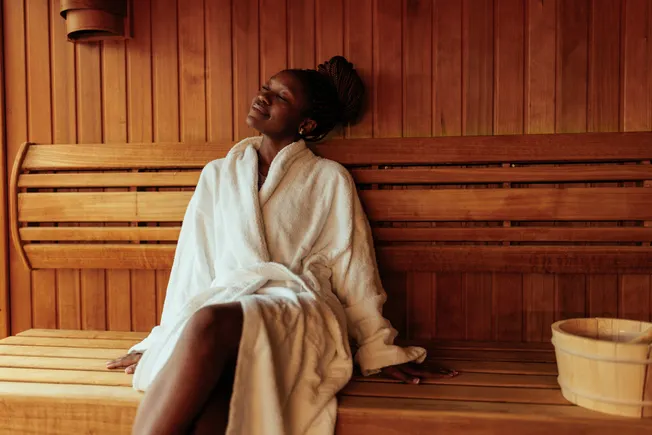
Data from McKinsey & Co. shows that the global consumer health market reached $1.8 trillion in 2024, and a significant portion of these consumers are also travelers.
In recent years, hotels have strengthened their wellness amenities to cater to guests' growing interest in maintaining their health while traveling. But what exactly is "wellness"?
"Whenever I'm asked this question, I laugh—because we just concluded the Wellness Tourism Association's annual international conference, and the opening question was: what does wellness mean?" said Molly Anderson, board chair of the Wellness Tourism Association and vice president of sales and programming at Canyon Ranch.
"Even within Canyon Ranch, we often discuss this question," she added. "Wellness is individual and unique to each person."
While "wellness" is difficult to define, "wellness travel" is relatively clearer. The WTA—an industry standards-setting network of wellness travel professionals—defines it as "travel that allows travelers to maintain, enhance, or start a healthy lifestyle, and supports or increases one's sense of well-being."
Regardless of the definition used, wellness travel is heating up. Research and Markets projects the global wellness tourism market will reach $1.2 trillion by 2027, a 63% increase from $735.8 billion in 2020.
Hotel Dive spoke with Anderson and other wellness travel experts to learn how hotels are leveraging one of the biggest trends in hospitality today—and what wellness amenities hoteliers can expect in 2024.
Built-in vs. Customized
The Global Wellness Institute divides wellness travelers into two categories: "primary wellness travelers," whose trips or destination choices are primarily driven by wellness motivations, and "secondary wellness travelers," who simply wish to maintain their health while traveling.
Resorts like Canyon Ranch—which are wellness destinations in themselves, with resident therapists, nutritionists, and doctors—have long served primary wellness travelers. But more hotel groups are introducing amenities to meet the needs of secondary wellness travelers.
"Wellness is moving beyond the walls of hotel spas and fitness centers, toward a more holistic approach that provides personalized and relevant wellness experiences throughout the guest journey."
Emlyn Brown, Senior Vice President of Global Wellness Strategy, Design, and Development at Accor
"We recognize that guests want travel to encompass all aspects of wellness, and we see this as an opportunity to integrate it into the guest experience from check-in to check-out," said Jessica Shea, Vice President of Wellness, Retail, and Leisure Operations for Hilton in the Americas. This means incorporating wellness considerations into hotel design.
At the recently opened Tempo by Hilton in New York's Times Square, Hilton introduced the "Power Down amenities"—a series of video content created in partnership with Arianna Huffington's Thrive Global and sleep-inducing room designs, which Shea said are intended to "create a cocooning sleep environment that helps guests relax." This initiative stems from findings in Hilton's 2024 trends report, which noted that the top reason guests travel this year is to "rest and recharge." All future Tempo by Hilton hotels will be designed around what Shea calls a "sleep experience first" approach.
Emlyn Brown, Senior Vice President of Global Wellness Strategy, Design, and Development at Accor, said Accor is also moving its wellness offerings "beyond the walls of hotel spas and fitness centers, toward a more holistic approach that provides personalized and relevant wellness experiences throughout the guest journey."
"At the hotel level, this means a greater focus on smart design, sleep quality, nutrition, and mental and emotional well-being support," Brown added. "In 2024, travelers can expect deeper integration of wellness and fitness into mobile apps, in-room yoga mats and equipment, outdoor running maps, and experiential fitness."
One way hotels are integrating wellness amenities into their operations is through dining programs. According to Grand View Research, the global functional foods market is expected to be worth $586 billion by 2030. Brown said Accor's culinary teams are working harder to "cater to a wide range of dietary preferences, ensuring guests have plenty of options for nutritious dining—more plant-based options, more low-alcohol or alcohol-free cocktails, and more customized menus."
Stephen Toevs, Senior Director of Culinary for Marriott International in the U.S. and Canada and executive chef, similarly told Hotel Dive that plant-based options will be on the rise this year.
According to Canyon Ranch's Anderson, wellness travel often aligns with a desire for experiences close to nature. She said hotels are likely to bring "more natural elements indoors" through design.
Some hotels are going further with wellness-oriented design by creating dedicated wellness floors. The newly opened Signia by Hilton Atlanta features an entire floor of wellness amenities, including a fitness center, pool, spa, and dedicated wellness rooms. Thompson Hotels' upcoming Houston property will also feature an entire floor dedicated to wellness.
Cutting-Edge Amenities
Beyond standard wellness offerings, hotels are incorporating cutting-edge technology into their services—most commonly in hotel spas.
"Technology is shaping the direction of spa wellness," said Accor's Brown. This includes infrared saunas, IV therapy, and non-surgical aesthetic treatments such as laser and oxygen jet treatments, which Brown said are "expected to become mainstream."
For example, the Fairmont Spa Century Plaza in Los Angeles offers a "biohacking" treatment that relies on multiple technologies: an "anti-gravity chair" for relaxation; "neuroacoustic headphones" to calm the mind and nervous system; infrared mats designed to regulate energy storage in the body; compression boots to promote circulation; and LED face masks to promote circulation, boost collagen production, and improve cellular renewal.
Anderson noted that many technology-driven spa services became popular during the pandemic, when "touchless" services (including LED light and infrared waves) were in high demand. She added that some of these services, previously only available in athletic facilities—such as hyperbaric oxygen chambers and compression boots—are now entering wellness resorts.
"People aren't waiting anymore... We're seeing our guest demographic age decreasing."
Molly Anderson, Board Chair of the Wellness Tourism Association and Vice President of Sales and Programming at Canyon Ranch
In Fort Worth—home to Canyon Ranch's newest club—guests can use the "Vitality Studio," which aims to enhance what athletes call "recovery." In the hospitality context, "recovery" means "not just recovery after intense exercise, but also recovery after a long day on your feet, or recovery after a flight," Anderson explained.
Travel Companions
Some hotels' wellness offerings rely less on technology and design and more on human interaction.
"In 2024, we expect to see a significant shift toward social wellness," Brown said. "Travelers are seeking more 'we'-based activities that foster connection and collective well-being. From community wellness programs to group activities like social bathing, hotels are embracing this trend to provide guests with a sense of community and shared wellness experiences."
Meanwhile, Anderson pointed to the rise of two seemingly opposite trends: family travel and solo travel. "Many people discovered solo travel during the pandemic, and they still enjoy it afterward," she said. "So solo travel is continuing."
At the same time, families are seeking more wellness travel experiences that allow them to connect with each other. Anderson said Canyon Ranch will launch its first "Family Camp" in 2024. This week-long program will offer family fitness classes, games, and educational experiences.
Both trends indicate that the demographic of "wellness travelers" has changed. When it comes to self-care, Anderson said, "People aren't waiting anymore."
"We absolutely see this at Canyon Ranch," she added. "We're seeing our guest demographic age decreasing."
