
6 Emerging Technology Solutions Impacting the Hospitality Industry in the First Half of 2026
In the first half of 2026, the hospitality industry is accelerating its adoption of emerging technologies, from AI-driven room service to smart energy management, which are profoundly transforming operational efficiency and guest experiences. This article outlines 6 key solutions and industry insights.
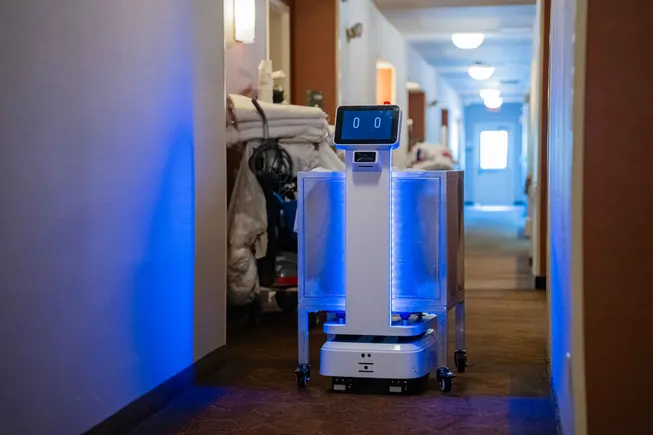
In the first half of 2026, the hotel industry continued to leverage technology solutions toreduce the workload of housekeeping staff, andmeet electricity demand. According to industry observations, these technology applications are expanding from single processes to full workflows.
The core role of artificial intelligence in hotel operations is increasingly prominent. According to a survey released by Mews in May,almost all hotel operatorshave adopted AI technology in their operations. For example, some properties use AI todrive air conditioning and heating systems, while a resort in Florida deployedAI concierge servicesto better respond to guest needs and improve booking conversion rates.
The following outlines six emerging technology solutions implemented in the hotel industry in the first half of 2026, along with insights from leaders in hotel technology.
1. AI-driven housekeeping and task assignment
To alleviate the workload of housekeeping staff, many hotels have introduced AI scheduling systems that automatically optimize cleaning task assignments based on real-time room status, checkout times, and staff locations, reducing unnecessary movement and improving efficiency.
2. Solar and energy storage systems
Some hotel groups (such as MGM Resorts International's properties in Las Vegas) have deployed solar panels and energy storage facilities to reduce dependence on the grid and achieve partial energy self-sufficiency, supporting sustainable development goals.
3. AI energy management (HVAC)
AI is used to intelligently control air conditioning and heating systems, dynamically adjusting temperatures by analyzing occupancy rates, weather, and historical data, significantly reducing energy consumption while ensuring comfort.
4. AI concierge and guest interaction
A Wyndham resort in Florida launched an AI concierge service that handles guest inquiries, recommends local activities, and directly guides bookings, thereby enhancing the guest experience and increasing direct revenue.
5. Robotic Process Automation (RPA)
Some hotels use RPA to handle repetitive back-office tasks such as booking confirmations, bill reconciliation, and report generation, freeing up staff to focus on high-value services.
6. Data-driven revenue management and forecasting
Using machine learning algorithms to analyze market trends, competitor pricing, and historical booking data, hotels can more accurately predict demand and dynamically adjust room rates, thereby optimizing revenue.
These technologies are not applied in isolation but work together. For example, AI energy management can be linked with room occupancy data, while preference data collected by AI concierge services can feed back into revenue management. Industry leaders point out that the key to technology investment lies in integration with existing systems and ensuring adequate staff training.
Looking ahead to the second half of the year, as AI matures, it is expected that more small and medium-sized hotels will adopt lightweight solutions, and technology vendors will also need to offer more flexible pricing models to lower barriers to entry.
(This article is compiled based on publicly available industry information and does not constitute investment or procurement advice.)